


The modular sofa guide: how to configure your perfect layout

The Modular Sofa Guide: How to Configure Your Perfect Layout
There is a reason modular sofas have become one of the most sought-after pieces in contemporary home design. Not because they are trendy, but because they make sense. A sofa that adapts to your space, your lifestyle and the way your home changes over time is not a luxury. It is just good thinking.
But with flexibility comes choice, and choice can feel overwhelming. So here is everything you need to know about configuring your perfect modular layout.

Start With Your Space
Before you think about style or fabric, think about the room. Measure twice, note where the natural light falls, where the traffic flows and where people tend to gather. A modular sofa should work with the architecture of your space rather than against it, and the configuration you choose should follow from that understanding. A long, narrow room calls for a straight configuration that keeps the space feeling open. An open-plan living area can handle something more generous, a U-shape or a corner setup that creates a natural anchor in the room. A corner that needs defining is exactly where a chaise or L-shape earns its place.
Choose Your Configuration
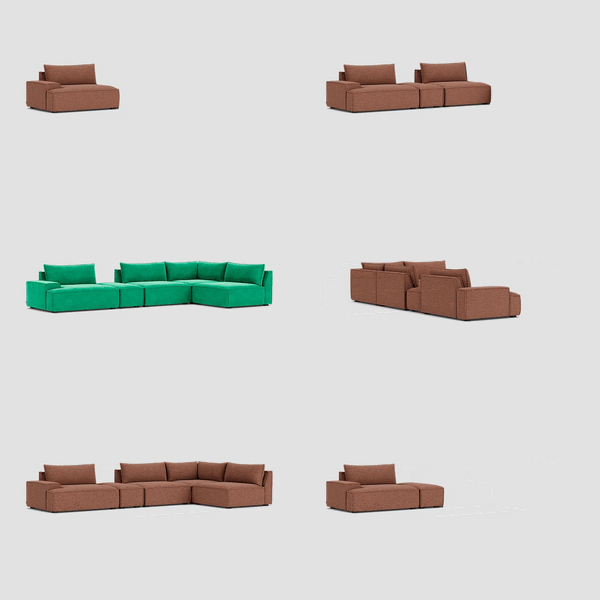
Most modular sofas offer four core configurations, each suited to a different kind of space and a different kind of living. The straight sofa is the most versatile of all, clean, classic and at home in almost any room. Daphne in Free Sage as a straight three-seater brings that low, lounge-inspired silhouette to a space without overwhelming it, the kind of setup that makes a room feel considered without trying too hard.
The chaise extends one end of a straight sofa into a longer seat, perfect for stretching out at the end of a long day or simply claiming a little more of the room you earned. Daphne in Pebble Rust with a chaise left is the kind of configuration that turns staying in from a default into a decision, deep seats, loose cushions and a bouclé that only gets richer with time.
The corner, or L-shape, defines a space in a way that few other furniture arrangements can. It creates a natural gathering point, gives a room a sense of intention and works particularly well in open-plan spaces that need anchoring. Paula in Moonlight Sand configured as a corner sofa brings organic, sculptural curves to a layout that could otherwise feel too angular, the kind of piece that looks as though it was always meant to be exactly where it is.
And then there is the U-shape, which is the configuration built for the homes that were made for gathering. Movie nights, family Sundays, the kind of evenings that stretch well past midnight. Maison Modular in Danny Cream in a U-shape is generous without being overwhelming, compact enough for a medium-sized room, spacious enough for everyone who matters.
Think About How You Live
A modular sofa is only as good as how well it fits the actual rhythms of your home, which means asking yourself the honest questions before you decide. If you have children or pets, choose a fabric that can handle everyday life without showing it. Pebble Rust on Daphne is a bouclé woven from wool, polyester and acrylic, designed with high abrasion resistance and a melange effect that makes dirt and stains far less visible. If you host often, a U-shape or chaise configuration gives guests somewhere generous to settle in without crowding the room. And if your space is likely to change, because you are moving, redecorating or simply not sure yet, that is exactly what the modular system is designed for. Daphne's connecting brackets make it simple to separate and reconfigure the modules whenever your life calls for it, without tools and without fuss.
The Fabric Matters as Much as the Form
The right configuration is only half the decision, because the fabric you choose determines how the sofa actually lives with you from day to day. For neutrals that work with everything, Moonlight Sand and Danny Cream both bring a calm, considered tone that lets the modular form speak for itself, the kind of shades that age well and never feel out of place regardless of how the rest of the room evolves. For something with more character, Pebble Rust brings warmth and texture in equal measure, weaving beige, rust and deep brown into a bouclé that makes every configuration feel richer and more grounded. And for a seasonal statement that does not shout, Free Sage on Daphne is the kind of colour that feels rooted in the moment without being tied to it, the corduroy texture adding depth without demanding attention.
Reconfigure as You Go
One of the most underused features of a modular sofa is the ability to change it, and most people configure once and leave it at that. But the whole point of a modular system is that it moves with you, when you redecorate, when you move house, when your family grows or your hosting habits shift. The brackets that come with Daphne and Maison make connecting and separating the modules completely straightforward, which means your sofa today does not have to be your sofa forever. It just has to be right for now, and that is more than enough.
A Note on Size
One of the most common mistakes when choosing a modular sofa is going too large for the space, and a U-shape that fills a room feels oppressive rather than inviting. As a general rule, leave at least 45cm between your sofa and the nearest wall or piece of furniture so the sofa has room to breathe and the people sitting on it have room to move. And always measure the doorways and hallways your sofa will need to pass through on delivery day, because the most beautiful configuration in the world is no use if it cannot make it through the front door.
The right modular sofa is not the biggest one or the most impressive one. It is the one that makes your home feel exactly as it should, considered, comfortable and entirely yours.